

The “S-ART” project had the wonderful opportunity to be selected to participate in the “Fly Your Satellite! Design Booster 2 Edition” programme organised by the European Space Agency (ESA Academy). In this programme, students have the unique opportunity to become familiar with the working methods adopted in professional space programmes by participating in their own student satellite project, whose mission is conceived in their own higher education institutions and whose development is financed by themselves. These aerospace projects are guided by ESA specialists through the different phases of the programme, following the typical development cycle of a space mission. This involves the manufacturing, assembly, integration and testing of their spacecraft, all with the aim of ensuring that the satellites undergo accurate verification.
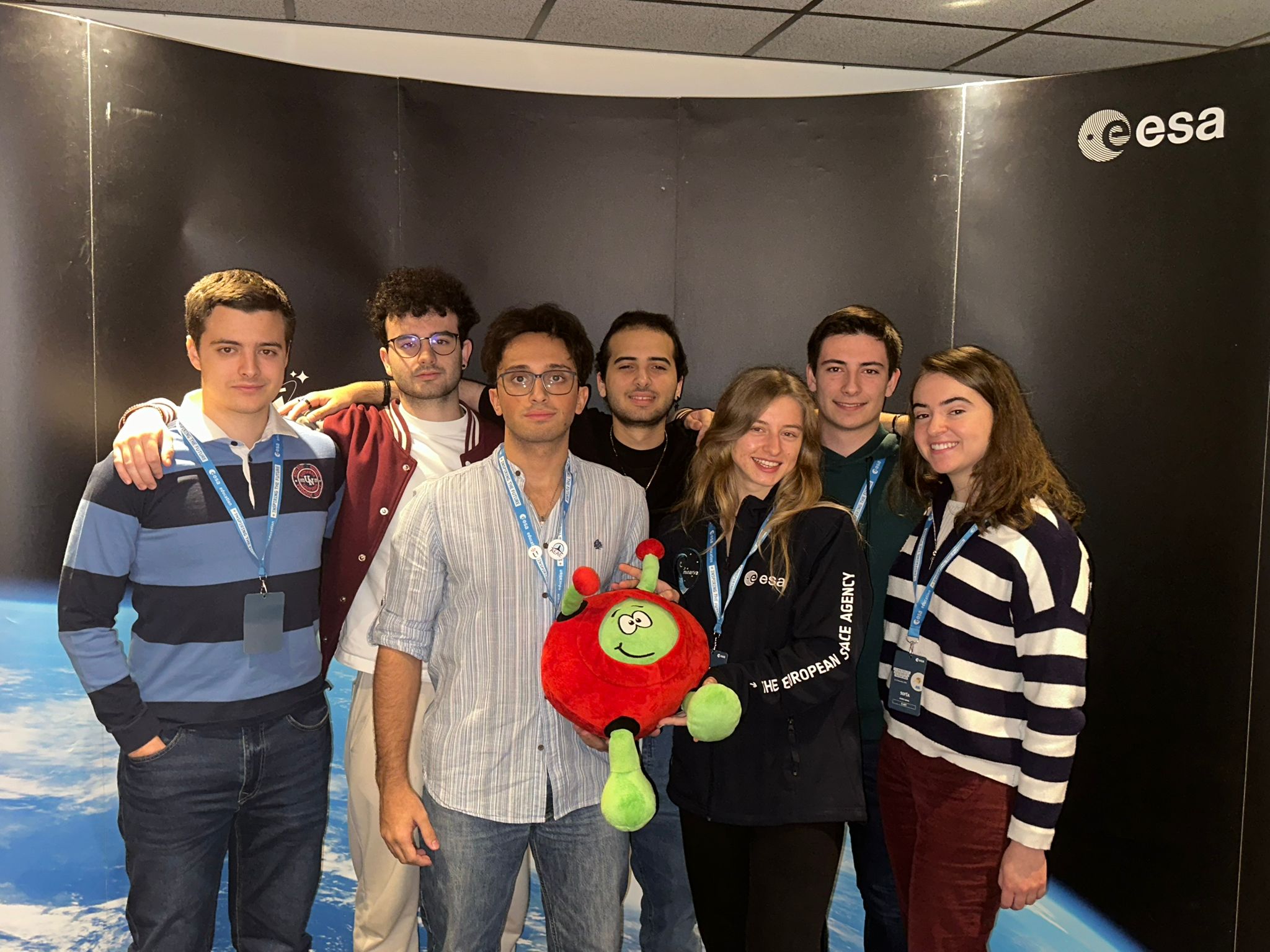
At the same time, students must prepare the necessary documentation to pass ESA’s technical reviews, and are then responsible for preparing the launch campaign and operating their small satellite in orbit, also ensuring that its disposal will be carried out in accordance with the updated “zero space debris requirements” policy. Student teams must pass project reviews to advance to each subsequent phase, and ESA will only offer launch to those teams that demonstrate the readiness of their spacecraft and ground segment, as well as compatibility with technical and safety requirements. Seven project team leaders attended: three students from the European University of Madrid belonging to the Galileo Club and four students from the Rey Juan Carlos University from the Cosmos Aerospace Association.
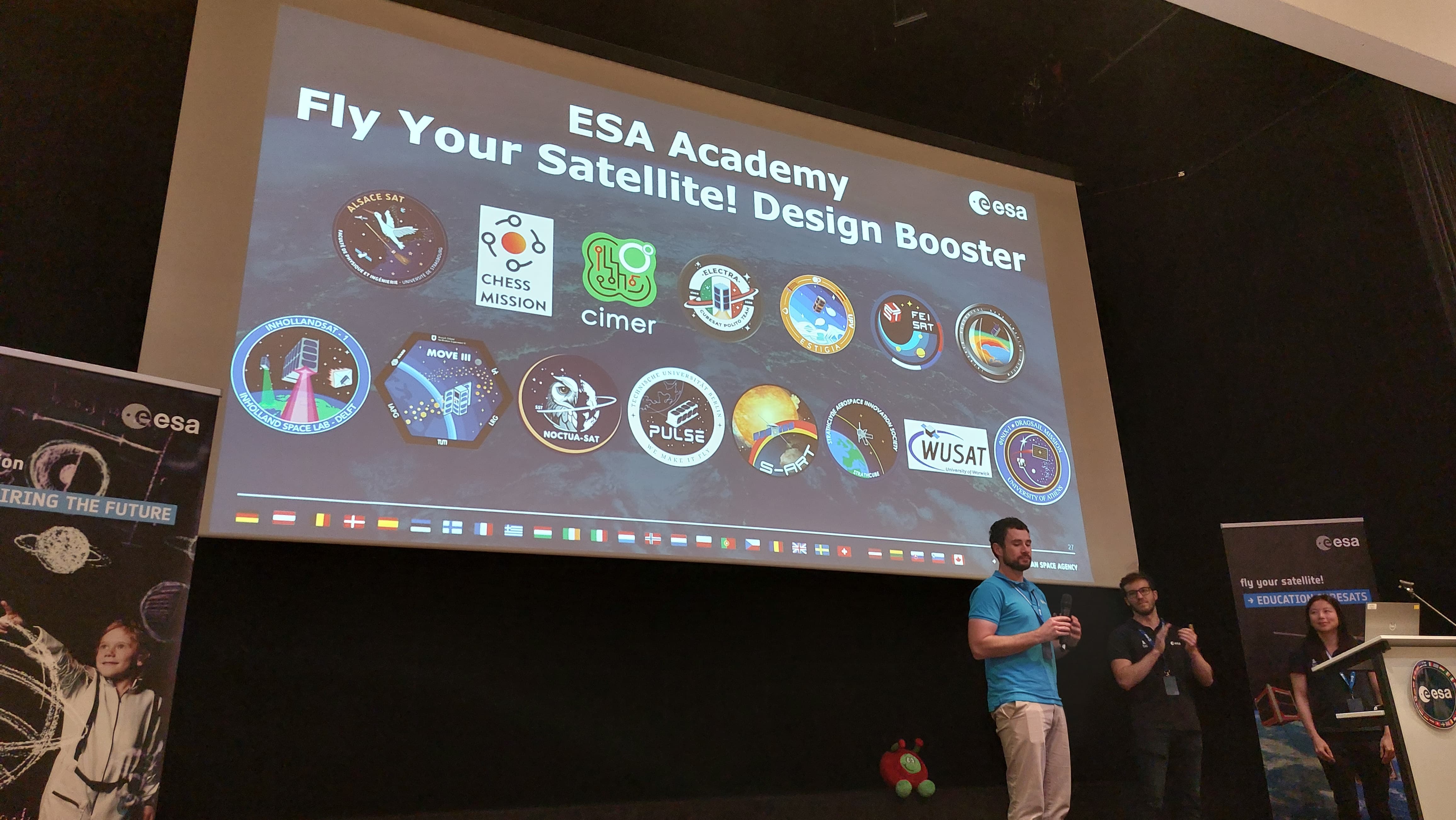
They participated during the week of 11 to 15 November 2024 in the programme's "Training Week", held at the ESTEC (European Space Research and Technology Centre) in the Netherlands. They spent five intense days of training, attending 22 master classes given by ESA professionals. They lived with 15 other teams of university students from different countries in Europe. They all shared their motivations and the atmosphere that was created was very enriching. The organisation of the event by ESA Academy was unbeatable, with unparalleled treatment towards the students and a very well distributed and intense schedule. The leaders will share all the information learned throughout the "Training Week" with the members of their teams in the coming weeks. We would like to thank the ESA Academy team, and in particular the organisers of this programme, for having contributed so much to our development as a student aerospace project and for having made it a unique experience in the lives of the seven young people who were part of "S-ART".